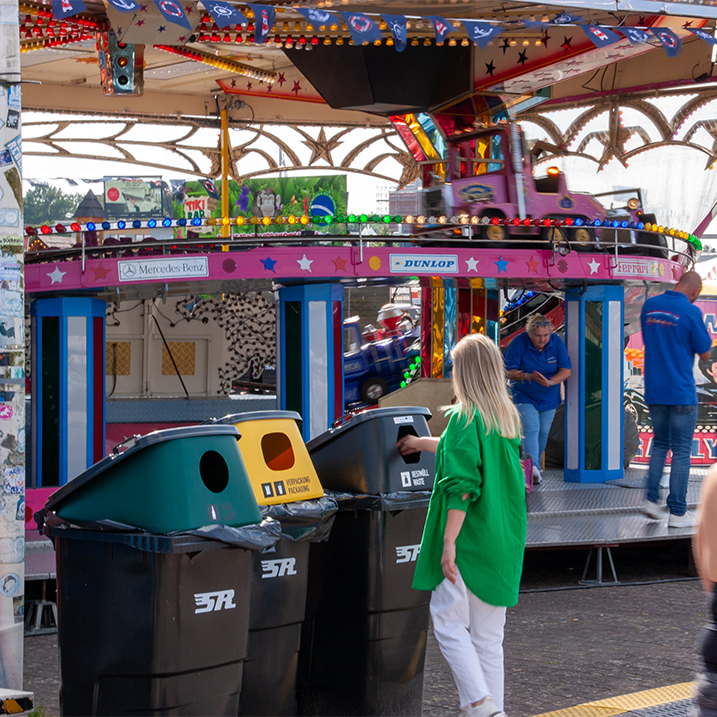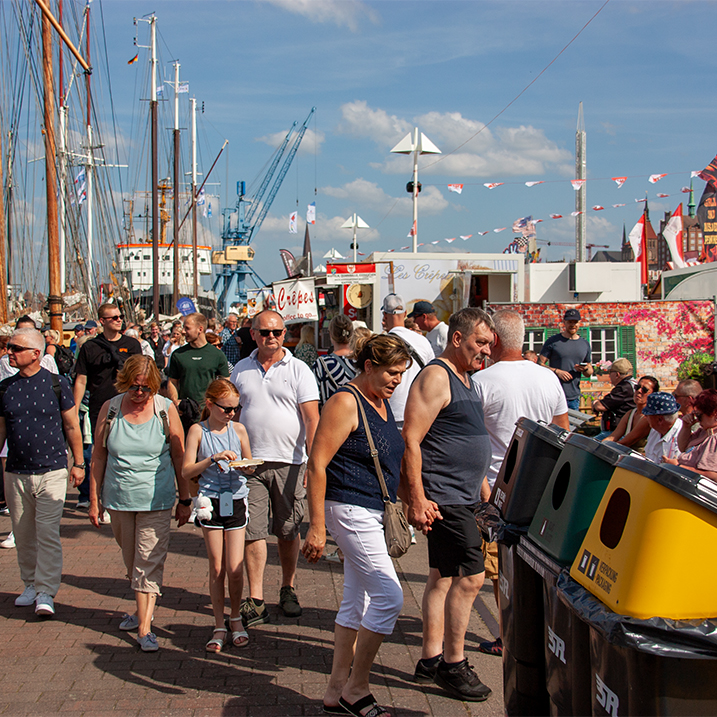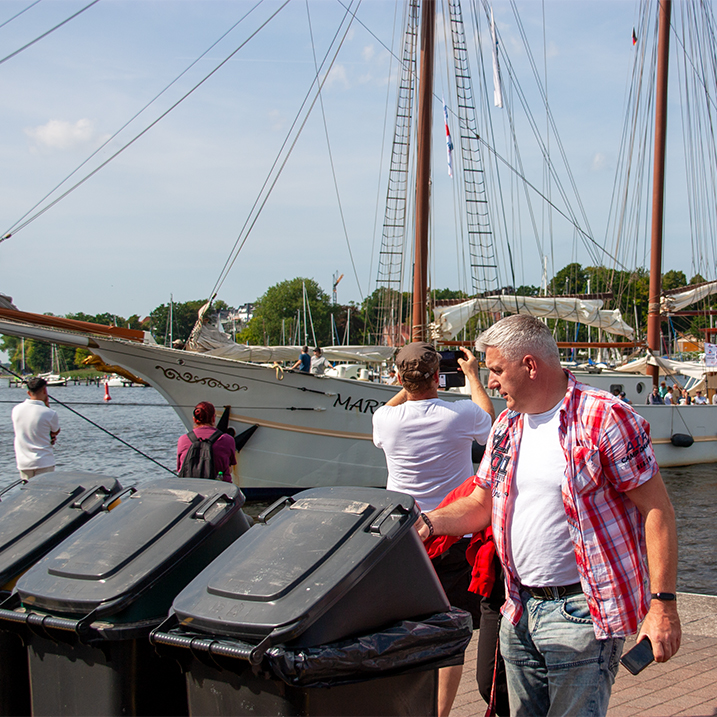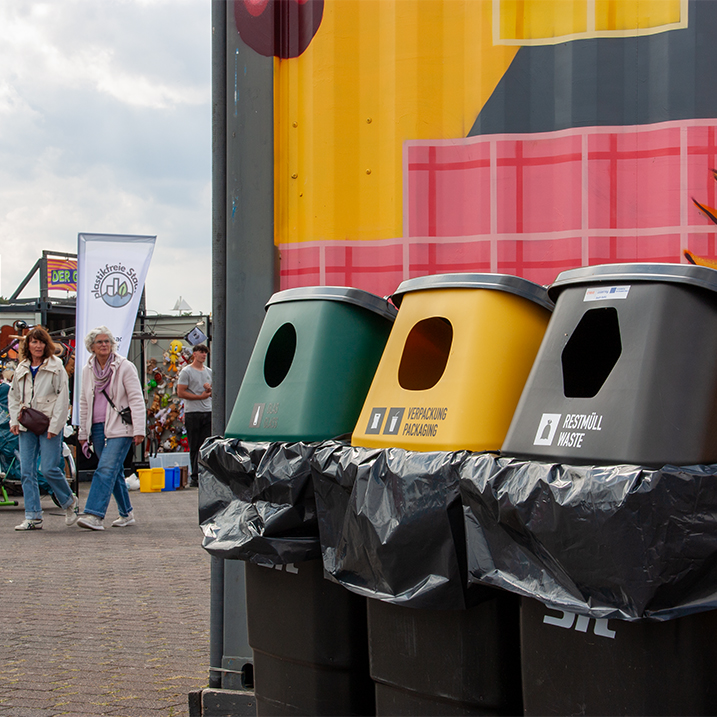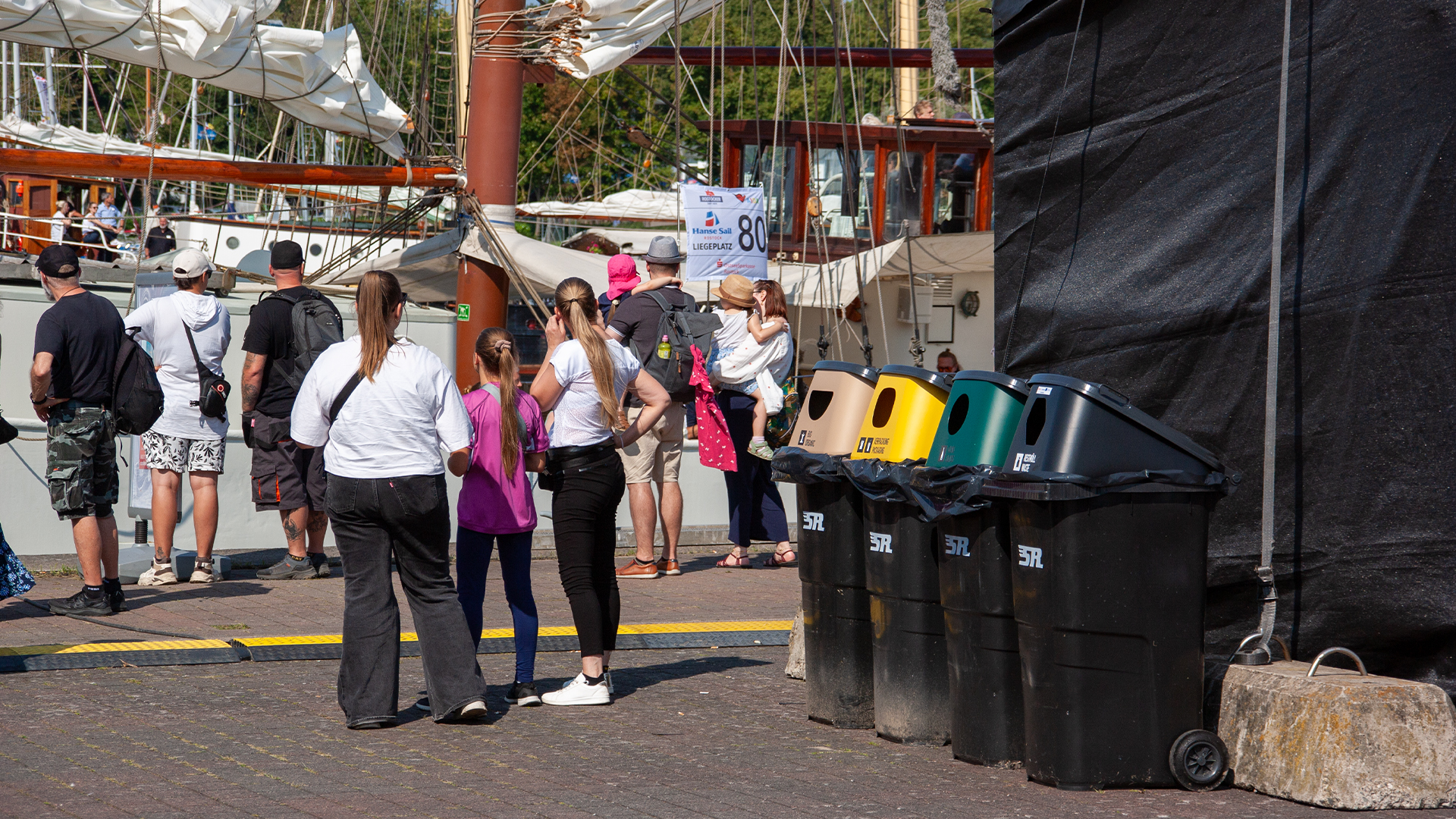
Development of a waste sorting concept for the Hanse Sail in collaboration with Wismar University of Applied Sciences. The final design was selected as the ‘lowest hanging fruit’ due to its simple design and was developed for a pilot scheme.The adapters are based on a redundant design approach. Colour, typography, icons and different opening styles make it possible to identify the respective waste category quickly and reliably. Furthermore, this means the adapters can be used regardless of the colour of the bins and can be flexibly adapted to local requirements. The wedge-shaped design of the adapters is inserted between the rim of the bin and the lid, which not only protects them from rainwater but also ensures clear communication and convenient waste disposal through user interaction. Their stackability facilitates easy transport.At the Hanse Sail, the entire Haedge peninsula site was equipped with 14 recycling stations. These enabled visitors to separate light packaging, organic waste, glass and residual waste. During the management of the test area, there was a great deal of positive feedback and an overall positive impression of user behaviour.
2024
September
Kick-Off
Development of a waste sorting solution suitable for the Hanse Sail, in collaboration with Rostock Municipal Waste Management and Wismar University of Applied Sciences.
2025
Mai
Planing
Agreement between Hanse Sail, Stadtentsorgung Rostock, Großmarkt GmbH and Wismar University of Applied Sciences regarding the adapters to be used and their positioning on the site.
2025
August
Implementation
Setting up the recycling stations and monitoring them throughout the festival
2025
November
Evaluation
During the evaluation meeting that followed, the pilot project’s progress was discussed, along with suggestions for improvements for the coming year
Impacts
What has been achieved
-
14
sorting stations
-
3
fractions each
-
4
days
Learnings
Learnings and next steps for the upcoming year

Focused
Fewer waste categories, tailored to actual needs. To achieve this, potential waste streams can be assessed in advance with traders, and a corresponding waste category layout drawn up. Empirical data, such as the increased volume of waste generated by traders and boats on the first evening, can also be taken into account.

Flexible
The festival can respond flexible to local conditions throughout the event. This is where the strength of the adapter comes into play. If an increased local demand for light packaging disposal is identified, the relevant waste stream can be made available very quickly in the form of collection bins. Alternatively, it can be removed if there is no need for it. The system should be able to adapt dynamically to the festival’s waste stream patterns. Responsibility for this must be clearly defined amongst the partners involved.

Responsible
Less fragmented responsibilities regarding waste management. The adapters should be included as part of the waste management service provider’s offering rather than being provided and managed separately by the festival.